

Table of Contents
- What Do UL, TUV and CSA Represent in the Supply Chain?
- Why Do International Brands, ODM/OEMs, Purchasing and Quality Assurance Care About Certification?
- Circuit Protection Component Certification Is More Than a Mark: First Separate the Four Levels
- How Should You Read UL Certification and Circuit Protection Component Certification? A Purchasing and Quality Checklist
- What Is the Relationship Between Certification and Supplier Audits?
- Fuzetec's Relevant Foundation in the Circuit Protection Component Supply Chain
- Scenario: When an International Brand Customer Requests an Alternate Part, How Should Certification Documents Be Confirmed?
- Eight Supplier Audit Questions for Purchasing, Quality and ODM/OEM Teams
- FAQ: Common UL, TUV and CSA Certification Questions from Purchasing and Quality Teams
- Conclusion: Certification Is the Common Language of the International Supply Chain, but It Must Return to the Part Number and Application Conditions
- Sources
The international electronic component supply chain values UL certification, TUV and CSA because these certifications and quality documents help brand customers, purchasing, quality assurance and ODM/OEM teams judge whether a component has traceable evidence of compliance. For circuit protection components, the point is not simply to look at a mark in a catalog, but to confirm that the company, the product series, the specific part number and the actual application conditions are all consistent.
Many supply chain problems do not arise the first time an engineer selects a part. They arise during customer approval, alternate part introduction, supplier audits or production changes. You may already have a datasheet, and you may have found a second-source part number that looks similar, but quality assurance will still ask: does this UL, TUV, CSA or quality system document cover the exact part number? Does the certification scope match the customer's market? Is the document version traceable?This article explains the role of UL, TUV and CSA in the international supply chain in a way that purchasing and quality assurance can act on, and organizes a checking process for circuit protection component certification. The point of safety and product certification is not to treat certification as a marketing slogan, but to turn it into auditable, comparable and traceable decision data.
Key Takeaways
- International brands often use UL, TUV and CSA to check product safety, compliance documents and supplier qualification, but the three cannot be treated as directly equivalent to one another.
- Circuit protection component certification must be viewed at separate levels: company/factory, quality system, product series, specific part number, and application system.
- An alternate part cannot be compared on price, appearance or rated current alone; the datasheet, thermal derating, Ihold/Itrip, test conditions and the scope of certification documents must also be confirmed.
- A supplier audit is not only about whether a certificate exists; it also covers document versions, traceability, change notification, production lots and the customer approval process.
- The Fuzetec company profile mentions UL, C-UL(CSA), TUV and ISO 9001-2000. Whether a specific part number meets a given certification still has to be confirmed against product documentation.
What Do UL, TUV and CSA Represent in the Supply Chain?
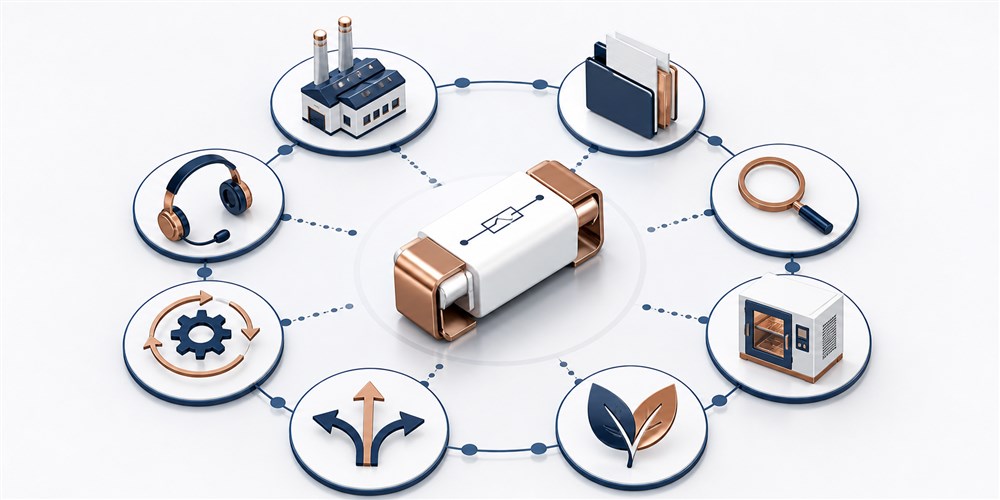
UL, TUV and CSA all appear frequently in compliance discussions involving electronic products, components and international customers. Their shared meaning is that they turn safety, standards, testing and documentation into third-party or institutionalized evidence. For purchasing and quality assurance, this evidence reduces the risk of relying only on a supplier's verbal claims.According to the UL Solutions certification page, certification services can cover people, products, facilities, processes and systems, verified against applicable standards and requirements. This concept matters because it reminds purchasing and quality teams that certification is not a single type, and one certificate cannot cover every question.
UL: A Common Language for Product Safety and International Market Trust
In the electronic component supply chain, UL is commonly used when discussing product safety, materials, component recognition and market entry requirements. For brand customers, UL certification or related documents can serve as one basis for reviewing whether a component meets specific safety requirements.But purchasing cannot simply ask "do you have UL?" More precise questions are:
- Which product series or part numbers are within the scope of certification?
- Are the company name, part number, series name and supplier information on the document consistent?
- Do the certification standard, limiting conditions and version meet the customer's requirements?
- Can this document support the current product market and application conditions?
TUV: A Testing and Certification Context Common in Europe and International Markets
International customers often regard TUV as an important name in the context of third-party testing and certification, particularly in European and multinational brand supply chains. If a customer specification calls for TUV-related documents, purchasing and quality assurance should ask the supplier for documents that map to the part number, standard and version, rather than relying on a presentation or a catalog marking.In practice, purchasing and quality assurance can first treat TUV as a document scope question, not merely as a purchasing bonus point. In other words, confirm whether the document corresponds to the correct product, standard, version and customer requirement.
CSA / C-UL(CSA): The Compliance Context for North America and Canada
CSA and C-UL(CSA) are frequently mentioned in North American and Canadian requirements. The Fuzetec company profile mentions UL, C-UL(CSA), TUV and the ISO 9001-2000 quality management system, which can be cited as company-level information.Note, however, that certification statements in a company profile do not automatically mean that every product, every series and every part number falls within the same scope. When a customer requires a specific certification, you must still go back to the exact part number, product page, datasheet, catalog, certificate or supplier documentation to confirm.
Why Do International Brands, ODM/OEMs, Purchasing and Quality Assurance Care About Certification?
For international brands, certification is not there to make a specification sheet look better; it is there so that cross-border teams can discuss risk using the same document language. Engineers look at electrical and thermal conditions, purchasing looks at lead time, alternate parts and price, and quality assurance looks at approval, audits and traceability. Certification documents connect these discussions.1. Reducing Market and Customer Approval Risk
When an electronic product enters different markets, brand customers usually require component suppliers to provide compliance data. Without complete documentation, a product may not pass the internal approval process smoothly.A common scenario looks like this: purchasing manager Elaine receives an AVL update request from a brand customer on a Friday, and the customer wants confirmation of an alternate part for a certain PPTC resettable fuse by Monday. Purchasing finds an option with better price and lead time, but during document review quality assurance discovers that the supplier provided a product series presentation, not certification or approval data for that exact part number. The blocker was not price, but insufficient clarity at the document level, which prevented the alternate part from moving to the next evaluation stage.
2. Supporting Supplier Audits and Quality System Reviews
A quality audit is usually not limited to whether the product works in a laboratory. It also examines whether the supplier has process management, document control, lot traceability, change notification and complaint handling capabilities.ISO 9001 is the international standard for quality management systems. According to the ISO 9001:2015 page, ISO 9001 is a globally recognized quality management standard that helps organizations establish, maintain and continually improve a quality management system. Such quality system data is often used to support supplier evaluation, but it still cannot replace certification documents at the product or part number level.
3. Supporting Second Source and Alternate Part Management
International brands generally do not want a single part number or a single supplier to create supply risk. Second sourcing, cross reference, BOM alternates and AVL management are therefore very common.Fuzetec provides Cross Reference as an entry point for alternate parts and cross referencing. Such tools help purchasing make a first pass at narrowing candidate part numbers, but they cannot replace engineering and quality confirmation. An alternate part still requires re-confirmation of electrical specifications, thermal conditions, package, application testing and the scope of certification documents.
Circuit Protection Component Certification Is More Than a Mark: First Separate the Four Levels
Many document disputes stem from the same misunderstanding: mixing up "the company has certification," "the product series has certification," and "this part number can be used in my product." For circuit protection components, these three must be confirmed separately.| Level | Common Documents | Questions Purchasing and Quality Should Ask |
| Company / factory level | Company profile, ISO 9001, IATF 16949, ISO 14001, audit data | Does the supplier have a foundation of quality and process management? |
| Product category level | Product series data, product certification data, catalog | Which series or categories are within the document scope? |
| Specific part number level | Datasheet, approval sheet, test report, certificate | Does the exact part number meet the customer requirement? |
| Application / system level | EVT/DVT/PVT testing, customer specification, product safety compliance | Does the component meet system requirements once placed in the actual product? |

Fuzetec's PPTC Resettable Fuse product group lists Radial Leaded PPTC, SMD PPTC, High Voltage Series, High Temperature Series, Battery Strap, and Chip & Disc PPTC. This is useful for product category and selection entry-point discussions.
Quality system documents answer "how the supplier manages quality," product category data answers "which product directions can be evaluated," and part number documents answer "whether this part meets this particular customer requirement."
Building an AVL or alternate part list? Use Cross Reference to find candidate directions first, then organize the UL, TUV, CSA, RoHS, REACH or SVHC document requirements specified by the customer, and have engineering and quality confirm them together.
How Should You Read UL Certification and Circuit Protection Component Certification? A Purchasing and Quality Checklist
The job of a circuit protection component is to help reduce risk under abnormal current, abnormal voltage or specific fault conditions. Certification documents therefore cannot be read in isolation; they must be interpreted together with the actual circuit conditions.Confirm the Part Number, Series, Version and Document Date
The first step is to compare the names on the document. A common purchasing error is to treat a similar series or a similar part number as covered by the same document scope.Please confirm:
- Whether the manufacturer, brand, series and part number on the document match the BOM.
- Whether the document version and date meet the customer requirement.
- Whether the customer requires proof at the product series level or for the exact part number.
- Whether the supplier can provide the latest document rather than an old scanned copy.
Confirm the Certification Body, Standard, Scope of Application and Limiting Conditions
UL, TUV and CSA may all appear in purchasing specifications or customer approval documents, but the scope of each document differs. Some documents may cover only materials, some cover a product series, and some carry usage restrictions for specific conditions.If the document scope is unclear, purchasing should not interpret it as "usable" on its own. A better approach is to provide the customer-specified standard, product market, application conditions and part number to the supplier for confirmation.
Confirm That Datasheet Specifications Match the Actual Application Conditions
Certification documents are not the whole of component selection. Taking the PPTC resettable fuse as an example, Fuzetec's PPTC selection guide lists considerations including operating voltage, hold current, trip current, maximum voltage, maximum current, time-to-trip, thermal derating, environmental conditions, safety certification and environmental compliance.This means purchasing and quality assurance cannot ask only "is it UL certified?" Engineering must still confirm:
- Whether the operating voltage is within the device's permitted range.
- Whether the normal load current is below the actual usable hold current (Ihold).
- Whether the fault current is sufficient to trigger the trip current (Itrip) and protection behavior.
- Whether ambient temperature affects thermal derating.
- Whether time-to-trip meets the requirements of the protected circuit.
Confirm Environmental and Customer Document Requirements
International supply chains rarely look at safety certification alone. RoHS, REACH, SVHC, conflict minerals, material declarations or customer-defined formats can all affect the approval process.If the customer requires a "complete approval package," a single screenshot of a safety certificate is usually not enough. Purchasing should first list the customer's document requirements and then ask the supplier to respond item by item.
Confirm PCN/ECN, Change Notification and Production Traceability Processes
What the supply chain really worries about is not only the first introduction, but changes after mass production begins. Changes to material, process, place of origin, packaging, marking, specification or test method can all affect customer approval.During a supplier audit, therefore, confirm the PCN/ECN process, lot traceability method, document retention practice and notification contact. This content is not necessarily written on a product certificate or safety certification document, but it affects whether an international brand is willing to place the supplier in its long-term supply system.
What Is the Relationship Between Certification and Supplier Audits?
Certification data is one piece of evidence in a supplier audit, but not the whole of it. The question a quality audit must answer is bigger: can this supplier deliver compliant components in a stable, traceable and communicative way?Certification Data Is an Entry Point, Not a Conclusion
If a supplier can provide certification and quality system documents, the audit has basic data to work from. But quality assurance still needs to confirm that the documents are traceable to the correct factory, product series and part number.For example, quality engineer Daniel was checking a protection component before DVT. The supplier provided a company profile, ISO documents and a product catalog, and the data looked complete. But after Daniel matched the documents item by item against the BOM, he found that the part number suffix required by the customer did not fully match the part numbers on the certificate list. He did not reject the submission outright; instead he asked the supplier to supplement the data for the exact part number. That step resolved the document issue before DVT and avoided a rejection by the customer's quality team at PVT.
Quality Looks at Process, Purchasing Looks at Supply Risk
Quality assurance cares about document control, process stability, lot traceability and change management. Purchasing cares about price, lead time, supply flexibility and alternate parts. The two have different goals, but both need the same set of verifiable data.If purchasing pursues only the lowest price without confirming documentation and change management, the project may stall at customer approval. If quality assurance checks only that a certificate exists without confirming supply flexibility, mass production may run into lead time risk.
Fuzetec's Relevant Foundation in the Circuit Protection Component Supply Chain
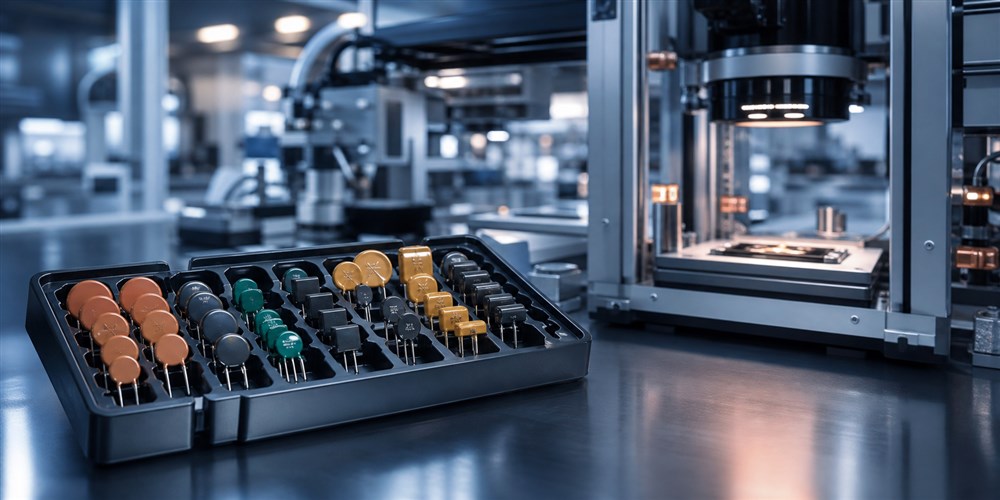
The Fuzetec company profile shows that Fuzetec Technology Corp. was founded in 1999 and is positioned as a designer and manufacturer of protection components. The company profile also mentions UL, C-UL(CSA), TUV and the ISO 9001-2000 quality management system.On the product side, the main extension point for this article is the PPTC Resettable Fuse product group linked above. If a project also involves overvoltage or power paths, the corresponding product categories and part number documents should be confirmed separately according to the actual circuit requirements.
This information is suitable for building a basic understanding of the supplier, but the article should remain precise:
- Company-level information cannot be extended directly into the certification scope of every part number.
- Product category information cannot replace the datasheet or approval documents for an exact part number.
- Certification data cannot replace thermal derating, fault current and prototype testing in the actual circuit.
- If a customer requires specific UL, TUV, CSA or environmental documents, this still has to be confirmed against the documentation for that part number.
Scenario: When an International Brand Customer Requests an Alternate Part, How Should Certification Documents Be Confirmed?
Alternate part management is where certification documents are most easily underestimated, because "looks similar" does not mean "the same document scope," and it does not mean "identical behavior once placed in the actual product."Suppose ODM project manager Sophia is working on a cost reduction for an industrial control device already in mass production. The customer agrees to evaluate a second source, but requires that existing safety compliance and the supplier audit process not be affected. Sophia's team finds a candidate PPTC with similar appearance, package and ratings. Purchasing wants to introduce it quickly, while the hardware engineer asks for a fresh comparison of Ihold, Itrip, time-to-trip, thermal derating and fault current. Quality assurance adds one more item: confirm whether the UL/TUV/CSA or customer-required documents cover that candidate part number.
In the end the team did not decide on price alone; they broke the alternate part introduction into four steps:
- Use cross reference to find candidate part numbers.
- Compare datasheet, package, electrical and thermal conditions.
- Confirm certification, environmental and customer approval documents.
- Complete prototype testing and customer approval before moving to mass production.
Eight Supplier Audit Questions for Purchasing, Quality and ODM/OEM Teams
If you are building an evaluation form for protection component suppliers, you can start from the following eight questions. They are not only there to obtain certificates; they are there to confirm whether the data can support mass production decisions.- Can the supplier provide documents at the company, factory, quality system and product levels?
- Do the documents map to the exact part number, rather than only to a broad category?
- Are the certification scope, standard, version and validity status clear?
- Does the datasheet match the customer's application conditions?
- Are RoHS, REACH, SVHC or other environmental documents provided?
- For a second source, are electrical, thermal, package and certification conditions re-confirmed?
- Is there a PCN/ECN and traceability process for production changes?
- If the application conditions are unusual, can the supplier support engineering discussion and test confirmation?
FAQ: Common UL, TUV and CSA Certification Questions from Purchasing and Quality Teams
Does UL certification mean the circuit is definitely safe?
Not necessarily. UL certification or related documents can support product safety and compliance review, but they cannot replace actual circuit design, datasheet interpretation, thermal derating, fault testing and system-level verification. For circuit protection components, you still need to confirm operating voltage, normal load current, fault current, Ihold, Itrip, time-to-trip, ambient temperature and package constraints.Can TUV, CSA and UL substitute for one another?
You cannot assume so directly. Different bodies, standards, product categories and market requirements may differ. Purchasing and quality assurance should confirm which document is required based on the customer specification, rather than treating one name as equivalent to another.What is the difference between company certification and part number certification for circuit protection components?
Company certification or quality system documents usually describe the supplier's management system or company foundation. Part number certification or part number documents must correspond to the exact part number. Customer approval may require both, but they cannot replace each other.When purchasing substitutes a PPTC, do certification documents need to be re-confirmed?
Yes. Substituting a PPTC cannot be based on package, rated current or price alone. Ihold, Itrip, maximum voltage, maximum current, time-to-trip, thermal derating, environmental conditions, document scope and customer approval requirements must all be re-confirmed.Besides certification documents, what else should a supplier audit examine?
It should also examine document control, lot traceability, change notification, complaint handling, process management, environmental documents, supply capability and the engineering support contact. Certification documents are important evidence, but supplier qualification depends on overall process capability.
Conclusion: Certification Is the Common Language of the International Supply Chain, but It Must Return to the Part Number and Application Conditions
UL certification, TUV and CSA are valued by the international electronic component supply chain because they turn safety, compliance, documentation and supplier qualification into checkable evidence. For brand customers, purchasing, quality assurance and ODM/OEM teams, this data reduces uncertainty in customer approval, supplier audits and alternate part introduction.But certification cannot be reduced to a single mark. When checking circuit protection components, confirm the company/factory, quality system, product series, exact part number and application conditions together. Whether a PPTC resettable fuse or another protection component is suitable still has to be confirmed against the datasheet, the thermal derating curve, fault conditions and actual testing.
If you are preparing a supplier audit, alternate part evaluation or protection component approval package for an international brand customer, first organize the part numbers, customer certification requirements, operating voltage, normal and fault current, ambient temperature, package constraints and test plan, then confirm documents and selection direction with Fuzetec.
Sources
Tag

