Table of Contents
GPU Server Power Anomaly Risk Is a Cluster Availability Issue
A GPU server power anomaly can stop more than one machine. In dense AI clusters, a rail disturbance may interrupt training jobs, invalidate checkpoints, or trigger service work across PSU, BBU, cooling, and compute teams. The protection objective is to keep an electrical event local and diagnosable.Unlike ordinary enterprise servers, GPU systems show large and fast load movement. A protection design must recognize legal workload transients while reacting quickly to unsafe overcurrent, overvoltage, surge, or reverse-current events.
Four Events That Deserve Separate Diagnosis
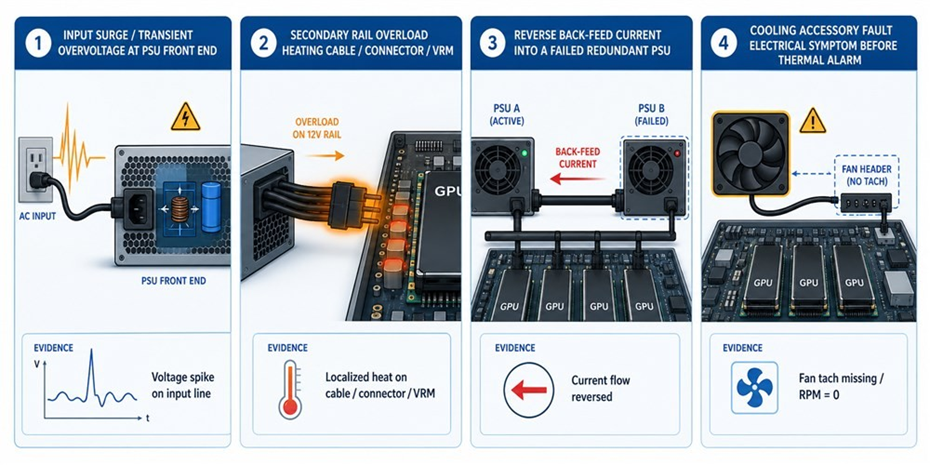
First, input surge and transient overvoltage can stress PSU front ends and control circuits. Second, secondary rail overload can overheat cables, connectors, VRM input stages, or POL converters. Third, back-feed current can move energy into a failed redundant path. Fourth, cooling accessory faults can create electrical symptoms before thermal alarms become obvious.
Each event leaves different evidence. Surge appears as a fast voltage event. Back-feed requires current-direction measurement. A secondary rail fault may show local heating before total rack current looks abnormal.
Multi-Layer Protection for GPU Power Paths
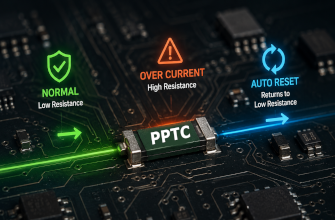
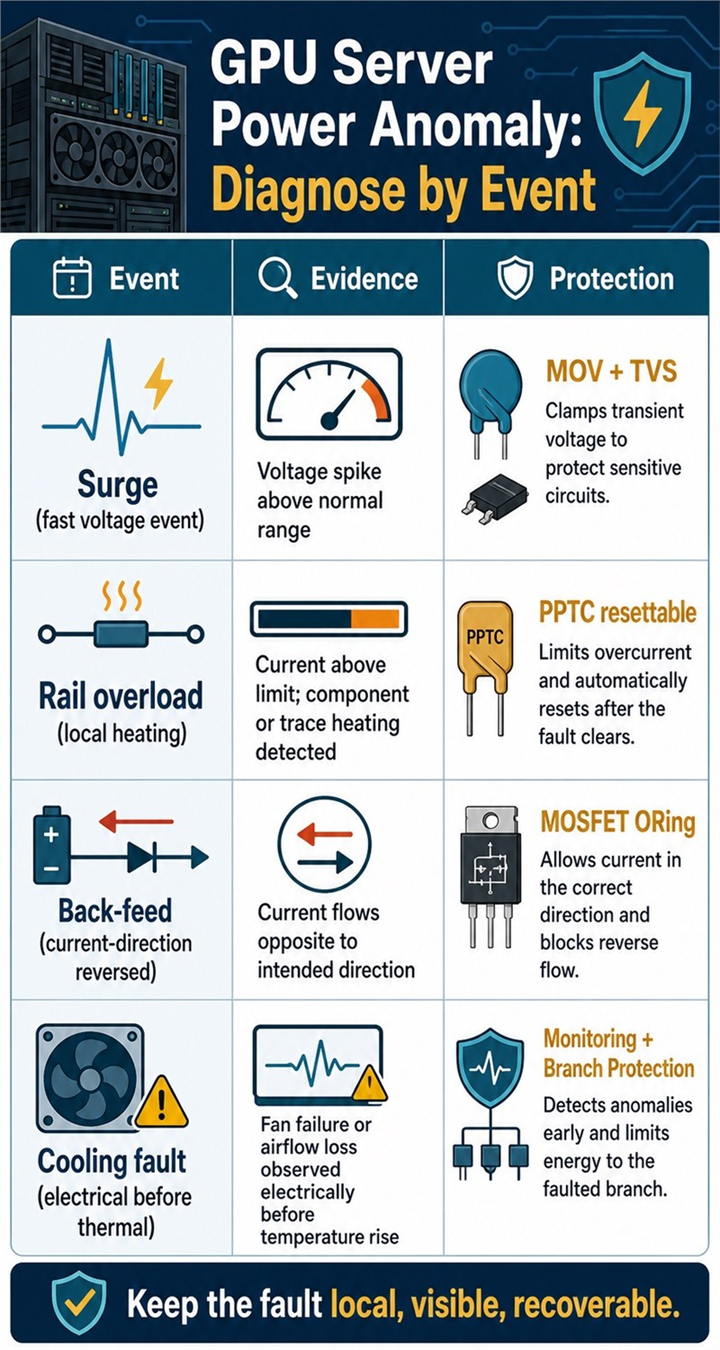
GPU power protection should be layered from input to load. MOV varistors and TVS diodes address surge and transient overvoltage. MOSFET-based ORing and load switches block reverse current and support fast disconnect. PPTC resettable fuses can protect recoverable branch faults after startup without replacing a part every time.
The layers should not all trip together. A fan branch fault should not remove accelerator power. A failed PSU branch should not back-feed through another supply. A board-level short should not force a whole rack outage if downstream isolation is possible.
Verification Should Follow the Event Timeline
• Review PSU logs, rail voltage, current direction, and thermal data by timestamp.
• Test workload load-step behavior separately from short-circuit and surge tests.
• Include BBU transfer, PSU redundancy transfer, hot insertion, and brownout recovery.
• Record whether protection recovers automatically, requires service, or latches off for safety.
GPU server power anomalies should be classified before parts are selected. A surge at the AC input, a 54Vdc rail dip, an output short, reverse current through an ORing path, and a connector with rising resistance each require a different response. Calling every event an “overvoltage problem” leads to protection that is either too slow, too broad, or placed in the wrong location.
The system boundary matters. In a current 400/480Vac-to-48–54Vdc architecture, input protection handles AC-side surge and fault energy, the PSU converts and supervises the rack rail, and secondary regulators feed lower voltages to loads. TVS diode protection is selected for transient clamping at the appropriate local rail; it is not a substitute for an overcurrent interrupter. On the high-current path, use fuses, eFuses, or solid-state breakers for fault isolation. Use PPTC devices only on lower-current secondary branches where resettable steady-state overcurrent protection is appropriate.
ORing deserves its own review in redundant supplies. A failed or undervoltage supply can become a reverse-current path unless the ORing MOSFET and its controller are designed for the actual transient and fault cases. Verify normal sharing, one-supply removal, a shorted downstream rail, controller loss of bias, and startup sequencing. Include the MOSFET safe operating area, body-diode behavior, and the voltage seen by nearby TVS diode devices.
Thermal symptoms are early electrical evidence. Darkened connector housings, unequal rail currents, rising millivolt drop across a joint, or a protection device operating near its thermal limit should trigger investigation before a shutdown. Use telemetry to compare current, voltage, temperature, and event timing. A log that only says “PSU fault” cannot distinguish a transient compute load from a degrading connection.
Validate the fault-containment plan at rack level. Test input surge as applicable, load-step recovery, output short, branch short, reverse-current challenge, and repeated restart. The goal is selectivity: the failed branch or PSU should isolate while healthy compute and redundant paths remain available. This is especially important when a GB200-class rack approaches 120 kW, where a small protection error can convert rapidly into lost capacity.
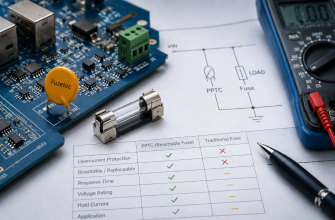
A practical review table should assign every abnormal event an owner, a sensing point, a response time, and an isolation boundary. Include the reset condition as well. A fast shutdown that cannot distinguish a cleared transient from a persistent failure can reduce availability just as effectively as an unprotected fault. Review firmware thresholds together with component ratings and measured waveforms.
FAQ
What is the first clue of a GPU server power anomaly?The first clue is often timing: whether the event follows workload change, hot service, PSU transfer, or cooling accessory startup.
Why is back-feed current dangerous in redundant GPU servers?
It can push energy into a failed PSU, BBU, or branch path, making the fault harder to isolate and potentially damaging another path.
Should GPU power protection prioritize uptime or safety?
Both, but safety defines the boundary. The design should isolate the smallest safe fault zone and preserve uptime only outside that zone.
Conclusion and CTA
GPU server power anomaly protection is about keeping faults local, visible, and recoverable. Fuzetec can help select TVS, MOV, PPTC, MOSFET, and hybrid protection for GPU server rails and redundant power paths.
Suggested Internal Links
• overcurrent protection device selection traps: https://www.fuzetec.com/en/news-detail/overcurrent-protection-device-selection-traps
• TVS diodes: https://www.fuzetec.com/en/product-lists/tvs-diodes
• power MOSFETs: https://www.fuzetec.com/en/product-group/power-mosfet
Tag